We transform Holocaust survivors’ narratives into AI-driven conversations to safeguard personal memories for future generations.
We provide interactive learning experiences that make Holocaust education accessible, inclusive, and meaningful for younger audiences.
We develop a framework that promotes responsible AI, interdisciplinary collaboration, and robust models for digital remembrance.
Echoes of Memory is a collaborative project focused on preserving the testimonies of Holocaust survivors and supporting Holocaust education for future generations. By using AI technology, the project offers interactive and accessible learning experiences that help address misinformation, encourage reflection, and promote shared values across Europe.
Our mission is to support the continued sharing of Holocaust history in a way that is engaging, respectful, and trustworthy. By connecting learners with survivors’ stories, we aim to help people better understand the past and reflect on the importance of respect, inclusion, and responsible citizenship.
Our consortium unites partners from six countries—Greece, Lithuania, Serbia, Romania, Poland, and North Macedonia — carefully selected for their strong commitment to Holocaust remembrance and the preservation of Jewish history. The partnership brings together experienced researchers, historians, and educators, alongside organizations recognized for their use of innovative, AI-driven technologies for social good.
Each partner was chosen for their active role in combating misinformation and antisemitism within educational contexts, as well as their ongoing efforts in awareness-raising and transnational networking. The widespread interest in the project’s aims among potential participants further reinforces the strength and relevance of this collaborative effort.
Echoes of Memory: Interactive Conversations with Holocaust Survivors through AI (“Echoes”) is a European, cross-border project designed to strengthen Holocaust education and remembrance in ways that speak to today’s learners, especially younger generations,without losing the seriousness, accuracy, and human dignity at the heart of the subject. At its core, Echoes develops AI-driven chatbots that enable guided, interactive conversations grounded in Holocaust survivor testimonies and verified historical material, so that people can learn through dialogue, curiosity, and reflection rather than only through one-way content.
The project is built around a simple but urgent challenge: survivors’ voices are precious, and time is not on our side. Echoes aims to help preserve these testimonies for future generations while also addressing the rise of Holocaust distortion and denial by making historically authenticated learning more accessible and engaging.
Echoes brings together partners from multiple countries and sectors,education providers, historical and research organisations, museums, and Jewish communities,so the result is not “tech for tech’s sake,” but a tool shaped by lived memory, scholarship, and educational practice. The project also develops a Transnational Governance Framework to guide ethical standards, collaboration, and responsible use, so that what is built can become a blueprint for future remembrance initiatives, not just a one-off experiment.
Echoes runs for 24 months under the EU CERV programme.
Think of the Echoes AI experience as a structured conversation space designed for learning,where visitors, students, or members of the public can ask questions and receive responses shaped by carefully curated testimonies and historical context. Instead of passively reading or watching, people can explore topics at their own pace: asking about everyday life before the war, moments of rupture and persecution, survival strategies, loss, resilience, and the longer shadows of trauma and rebuilding.The goal is not to “gamify” history or create a spectacle. The goal is to make learning interactive and personal while remaining grounded and respectful. A conversation-based format can help learners who might otherwise stay silent in a classroom find the courage to ask: “What did people know at the time?” “How did families stay connected?” “What happened after liberation?” That kind of questioning can become the bridge between historical facts and deeper understanding.
Just as important: these are educational simulations, not living people. Echoes is designed to make that clear, and to encourage users to treat the experience as a guided encounter with testimony,something that invites empathy, critical thinking, and responsibility, not role-play. The project also plans consultation and validation steps with stakeholders (including educators and community representatives) so that the experience supports real learning needs and remains culturally responsive and inclusive.
In short, it should feel like a conversation that helps you learn,and leaves you thinking long after you close the screen.
Echoes is being built with the understanding that Holocaust education is not just another content area, it demands precision, care, and a commitment to the people whose lives and families were shattered. That’s why the project’s structure places historical validation and ethics at the centre, not as an afterthought.
First, the project gathers testimonies and archival material through a defined research approach and then develops a Methodological Framework that sets standards for how information is collected, interpreted, and used,covering historical authentication, intercultural sensitivity, gender-sensitive language, and safeguards for working with sensitive narratives. This is strengthened through focus groups that bring in expertise and perspectives from different communities and disciplines.
Second, Echoes includes a dedicated phase for synthesising archival data into narrative structures and running an expert-oriented online symposium to review ethical and educational implications. This is paired with open consultations that bring in Jewish communities, educators, researchers, and technical experts,so accuracy is checked not only against documents, but also against educational realities and community responsibility.
Third, the project develops a Governance Framework intended to guide decision-making, data handling, collaboration, and conflict resolution across countries and institutions. In other words, the safeguards are not only technical; they’re also organisational and cultural.
Finally, the project is built to be revised: pilots, feedback loops, and evaluation mechanisms are used to improve the tools before wider adoption,because “getting it right” is an ongoing duty, not a checkbox.
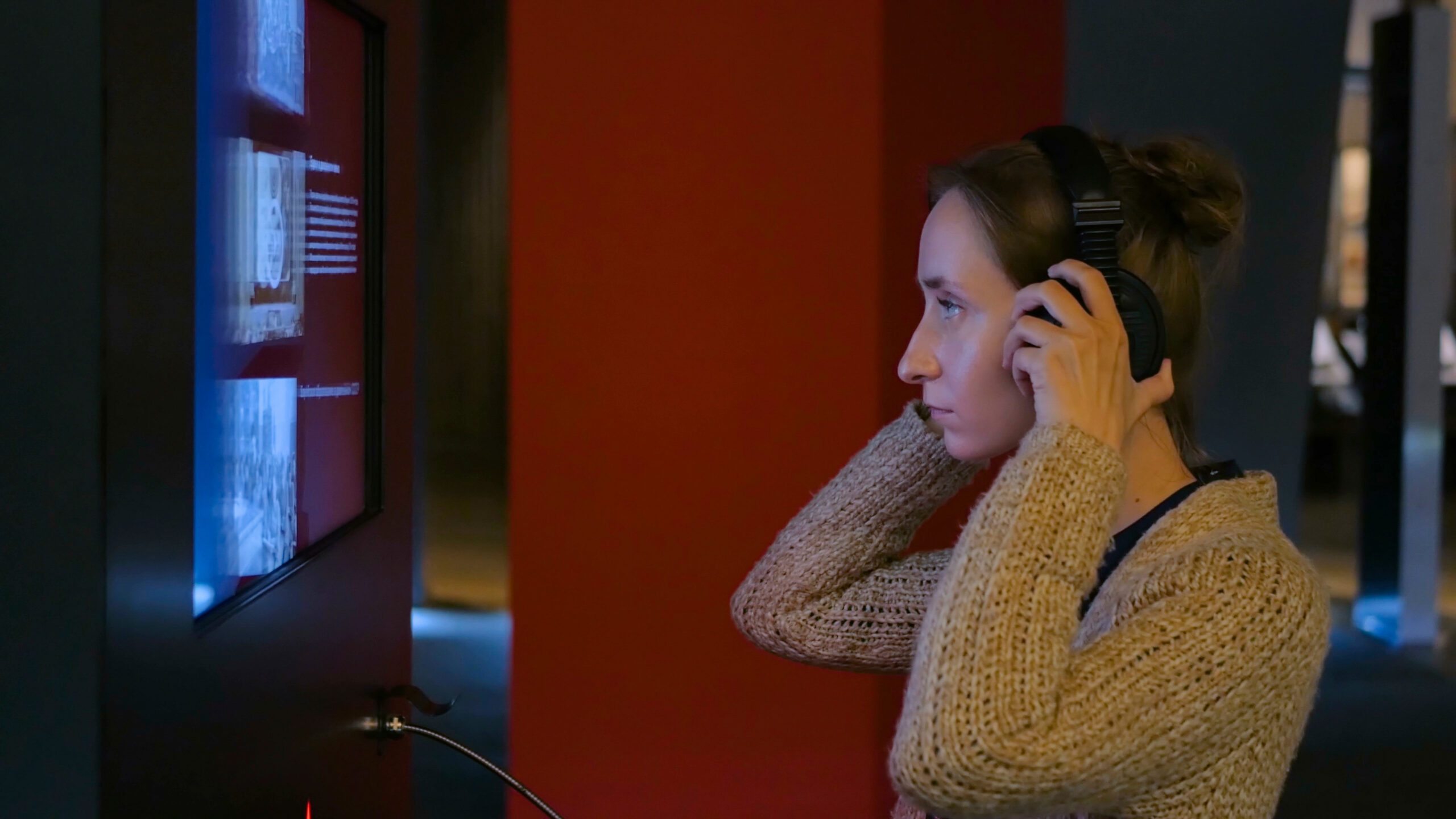
Museum pilots are where Echoes moves from development into lived public experience,carefully, and with listening built in. During this phase, partner museums and cultural spaces will host in-site pilot sessions where visitors can try the AI conversation tool in a guided or supported setting. The objective isn’t simply to “show the technology,” but to test whether the experience genuinely supports learning, reflection, and respectful engagement.
Visitors can expect an experience shaped around interaction and feedback. The project plans to use pre- and post-pilot questionnaires to evaluate things like perceived historical clarity, emotional and educational impact, level of engagement, and overall satisfaction. This feedback is not decorative; it’s meant to guide updates to the AI agent and to improve how museums facilitate the experience for different audiences.
Crucially, pilots are also about readiness: museum staff are prepared through training activities and a dedicated guidebook that supports best practices, ethical considerations, and practical requirements (like equipment needs and how to integrate the tool into a visitor journey). That matters because the same tool can feel deeply meaningful;or confusing, depending on how it’s introduced and contextualised.
Echoes also emphasises inclusive participation: the pilots aim to engage people across age groups, with attention to gender balance and broad accessibility. In an ideal pilot, visitors leave not only with new information, but with a stronger sense of why memory matters, how distortion spreads, and what it means to carry historical responsibility forward.
In short: expect a thoughtful pilot, designed to learn from visitors as much as visitors learn from it.
Echoes is built to meet learners where they are,classrooms, universities, training settings, and even hybrid environments,while also supporting educators with structure, guidance, and practical tools. The project includes dedicated activities for educational providers, including training sessions and the creation of a guidebook for educators and staff that addresses pedagogy, ethics, data protection awareness, inclusive approaches, and ways to pair AI interaction with meaningful learning activities.
For educators, Echoes can function as a powerful “entry point” to deeper study. A well-facilitated AI conversation can spark questions that lead into primary sources, historical analysis, and discussions about human rights, discrimination, civic responsibility, and the dangers of propaganda. It can also support differentiated learning: some students engage best through dialogue, others through reflection and follow-up tasks,Echoes makes it easier to offer multiple pathways into the same learning goals.
For learners, participation can happen through pilot implementations in educational institutions, where students interact with the tool in a supported setting and share feedback through evaluation questionnaires. That feedback helps the project improve not only the AI experience, but also the teaching strategies around it,so the tool evolves with real educational needs.
For institutions, Echoes offers more than a “resource”: it offers a model for integrating innovative digital learning responsibly, with attention to inclusion and ethical integrity. And because the project is transnational, institutions also gain the chance to connect with a broader European ecosystem of museums, researchers, and communities working on remembrance.
If you want to get involved, the simplest path is to participate in a pilot or training opportunity through a partner organisation, bringing your learners, your questions, and your honest feedback.

More ECHOES info at CORDIS
This project has received funding from the European Union’s CERV programme under Grant Agreement N° 101196254